
THE BETTER HUMAN GUIDE TO BIOHACKING
What is actually worth measuring, testing and experimenting with — and what probably isn’t. The one piece we’d hand anyone before they buy another wearable, supplement or red glowing device.

Measure it. Test it. Question it.
From wearables and supplements to sleep tech, biomarkers and self-experiments — we test the tools promising to make humans better. Curious about the science, sceptical of the hype, willing to run the experiment and willing to say when something did nothing.
Before you buy another wearable, supplement or red glowing device — start here. Not the latest — the most important.

What is actually worth measuring, testing and experimenting with — and what probably isn’t. The one piece we’d hand anyone before they buy another wearable, supplement or red glowing device.


Biohacking isn’t one thing. Pick the tunnel that fits what you’re curious about — and what you’re willing to actually test on yourself.

Put your body on the dashboard — and learn what to ignore.

What’s useful, what’s questionable, what’s expensive urine.

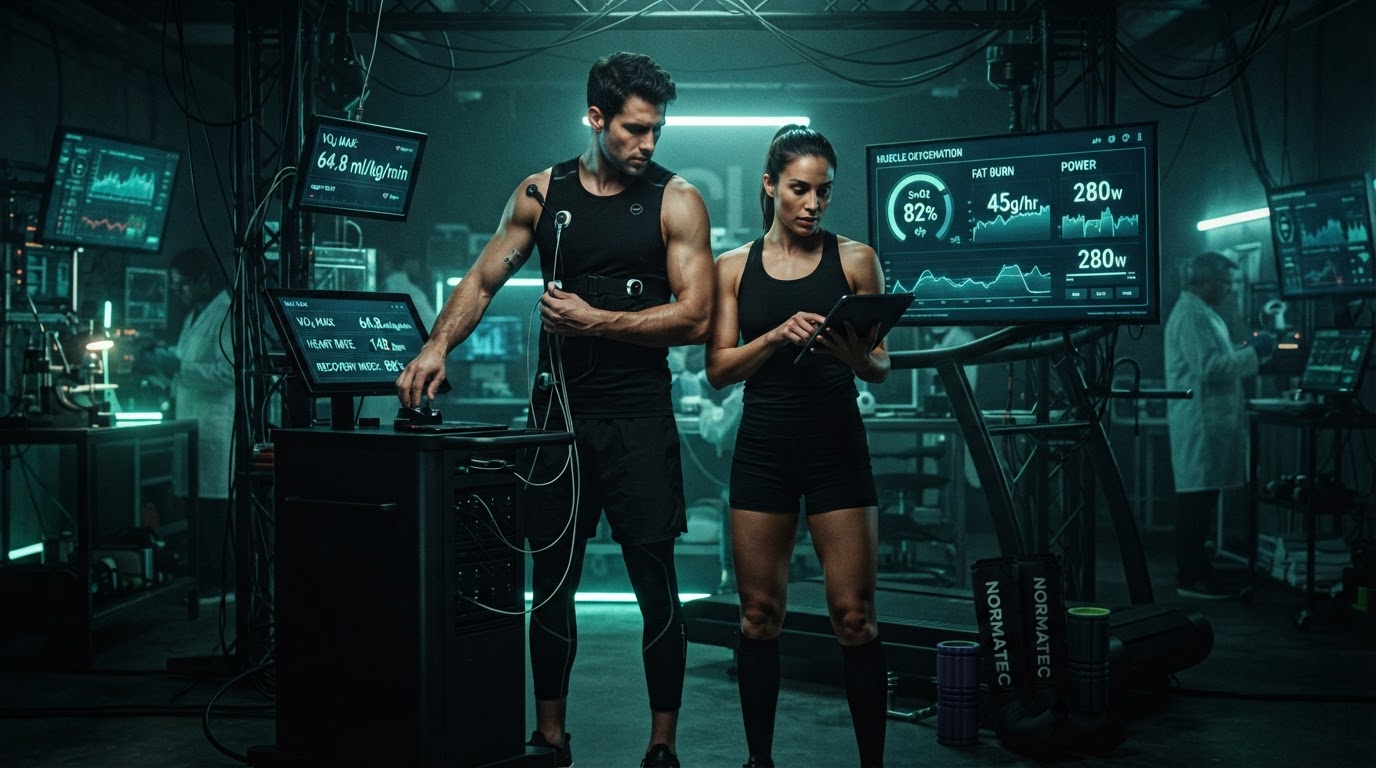
Can technology actually help you recover — or just score you?

Look under the hood. Measure what actually matters to you.

Turn yourself into N=1. Track, test, learn — honestly.

We can now measure sleep, heart rate, glucose, stress, recovery and almost everything else. But does having more data actually make us better humans — or just more anxious ones?

What’s worth measuring, what’s worth testing, and what’s mostly marketing dressed up as science.


Before trying to optimise anything, spend seven days simply measuring your normal life. Track sleep, steps, resting heart rate, training, energy and mood. Do NOT deliberately change anything. At the end, ask what patterns you can actually see. The message: measure before you meddle.
RUN THE EXPERIMENTTrack sleep, steps and resting heart rate for seven days.
Log your training, energy and mood each evening.
Do NOT deliberately change anything. Just observe.
Weigh in only if relevant — once, at the same time.
At day seven, look for the real patterns, not the spikes.
EXPERIMENT · 30 DAYSTHE IDEA
Wearables give a single ‘readiness’ number each morning. We wanted to know how it actually compares to listening to the body.
THE PROTOCOL
Cover the score for 30 days. Train based on sleep quality, soreness, motivation and how the warm-up felt. Log everything.
WHAT WE MEASURED
Training performance, perceived effort, sleep, mood and how often we’d have overridden our own judgement using the score.
WHAT HAPPENED
We trained hard on several days the app would have told us to back off — and felt fine. We also backed off twice the score would have green-lit.
WHAT SURPRISED US
How often the score and the body disagreed. The body was a better guide to readiness than the number more often than expected.
WHAT DIDN’T MATTER
Knowing the score didn’t make the training better. It mostly made us second-guess decisions that were already obvious.
WOULD WE KEEP DOING IT?
Mostly yes. The wearable is useful for trends over weeks — not a daily permission slip to train or rest.
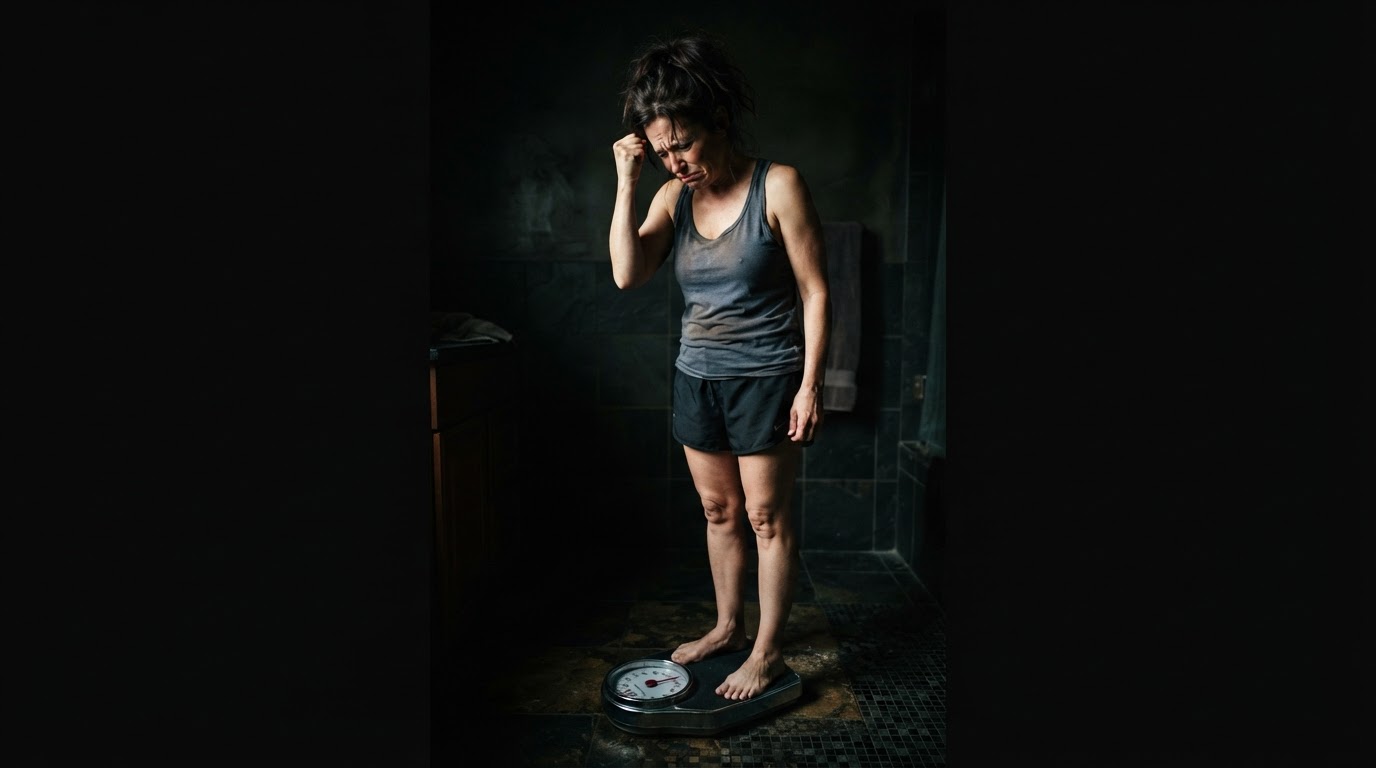
What happens when you stop letting a number on your wrist decide whether you train? We ignored the recovery score for a month and let sleep, soreness and feel guide the call instead.
SEE THE EXPERIMENTIllustrative experiment journal — no body-transformation claims.

“Correlation isn’t causation. A wearable spotting a pattern isn’t the same as understanding it.”

“Most people don’t need more data. They need someone to help them read the data they’ve already got.”

“Your sleep tracker is an estimate, not a measurement. Treat the number as a rough guide, not a verdict.”

“The supplements with the best evidence are also the cheapest. That’s not a coincidence you should ignore.”
Illustrative profiles — demonstration contributors. No fabricated qualifications or endorsements.
Straight answers to the questions that come up again and again about wearables, supplements and gadgets — before you spend money on them. No hype.
CAN YOU TRUST YOUR SLEEP TRACKER?
WHAT DOES HRV ACTUALLY TELL YOU?
IS CREATINE WORTH TAKING?
DO CGMs MAKE SENSE IF YOU DON’T HAVE DIABETES?
DO ICE BATHS ACTUALLY WORK?
WHAT DOES SAUNA ACTUALLY DO?
IS RED LIGHT THERAPY WORTH IT?
HOW ACCURATE ARE BODY-FAT SCALES?
WHAT BLOOD TESTS ARE ACTUALLY USEFUL?
DO YOU NEED A WHOOP, OURA OR GARMIN?
ARE LONGEVITY SUPPLEMENTS WORTH THE MONEY?
CAN A WEARABLE REALLY TELL YOU WHEN TO TRAIN?
The emerging health-performance technology, tools and claims circulating right now. Interesting doesn’t mean proven — we keep them clearly labelled.
CONTINUOUS GLUCOSE MONITORING
CGMs for non-diabetics are everywhere. Useful signal for some, expensive noise for many — the personalised response part is genuinely interesting.
AI HEALTH COACHES
LLMs reading your wearable data and handing you advice. Promising direction, currently very confident about very little.
BIOLOGICAL AGE TESTING
‘Ageing clocks’ promise a single number. What they measure — and how repeatable they are — is still genuinely unsettled.
SMART RINGS
Rings are now a mainstream sleep and recovery tracker. Good trends, still no device that measures sleep perfectly.
NON-INVASIVE GLUCOSE MONITORING
Reading glucose through the skin without a needle. The holy grail if it works; accuracy is the whole game.
PERSONALISED BLOOD TESTING
At-home panels interpreted for your context rather than generic ranges. Interesting framing, quality varies wildly.
METABOLOMICS
Reading the small molecules your body produces. A genuinely interesting frontier — and a long way from your wrist.
DIGITAL TWINS FOR HEALTH
A virtual copy of you to test interventions on. Compelling idea, mostly speculative at the individual level today.
Hype versus evidence. Cost versus effort. What’s claimed versus what the data actually supports. We cut through the noise so you don’t have to. Useful, slightly irreverent, anti-hype.
VERDICT
Interesting tool.
Not magic.
Use carefully.
VERDICT
Some real biology.
Mostly oversold.
Don’t expect much.
VERDICT
Rare supplement that works.
Cheap, safe, effective.
Boringly good.
VERDICT
Interesting for some.
Noise for many.
Know why you’re wearing it.
Design prototype — scores are illustrative editorial judgements, not scientific ratings or medical advice. Evidence shifts; read the linked guides before deciding.
ARTICLE
DEVICE TEST
VIDEO
EXPERIMENT
GUIDE
RADARBetter Human members turn interesting ideas into structured experiments, Sprints, Challenges and Programs. Measure something. Test something. Learn something. Still you doing the work.
Measure your normal life for a week before you try to optimise anything.
A structured two-week test of the sleep changes that actually move the needle.
A month of honest measurement, one variable at a time.
Prototype programs shown for illustration. Membership does not guarantee specific results.